• (Note: This analysis is based on top search terms by Korean users on Google.)


    The “Google guy” writes about Google again…

    Many bloggers want to boost traffic to their websites.
    But most don’t even know what people are actually searching for.
    (Yes… this might be about me too.)
    In this post, I’ll explore the most-searched keywords on Google in Korea,
    and how bloggers can choose the right keywords depending on mobile vs. PC trends.


    1. 🔍 “Top 10 Most Searched Keywords on Google Korea”

    RankOverall (PC + Mobile)Mobile FocusPC Focus
    1Naver (37.2M)WeatherGoogle Drive
    2YouTube (30.4M)YouTubeGmail
    3Yutube (30.4M, typo)Tomorrow’s weatherPhotoshop
    4Porn (16.6M)Naver ShoppingHangeul download
    5Weather (16.6M)WebtoonsPDF converter
    6Newtoki (9.1M)CoupangExcel functions
    7Femco (7.4M)TranslatorHow to start a blog
    8Tomorrow’s weather (7.4M)Real-time trendsAdobe Premiere Pro
    9TV Wiki (7.4M)Live TVWeb server setup
    10Naver Shopping (6.1M)Daum NewsPortfolio template download

    This table is more than just a popularity ranking —
    It’s a strategic starting point to choose your core keywords
    and develop long-tail variations.

    (Also: Naver was overwhelmingly #1, “Yutube” typo is hilarious, and #4 and #6… yeah, let’s skip that.)

    Mobile users tend to search light and instant content like weather, while
    PC users often search technical, productivity-related info — possibly blog-worthy material!


    2. 📱💻 “Mobile vs. PC: Different Search Behaviors”

    Mobile = Immediate & casual needs (weather, shopping, webtoons)
    PC = Work-related, tools, productivity-focused (Excel, Photoshop, downloads)

    Depending on your blog’s style, you might want to target one or the other.


    3. ✍️ “Popular Keywords Attract Traffic, But Also Heavy Competition”

    Terms like “YouTube” or “weather” are super saturated.
    You might get clicks, but it’s hard to stand out.

    🔸 The trick? Long-tail keywords.
    Instead of “weather,” try:
    👉 “Will Seoul’s rainy season end in the second week of July?”


    4. 🧠 “So How Should Bloggers Build Keyword Strategy?”

    Use high-volume keywords to understand what people want.
    Then filter through your blog’s niche and your reader’s context.
    Match that to the right timing, titles, and tone.

    For example:

    • PC-friendly topics → Technical blogs, how-tos
    • Mobile-friendly topics → Reviews, product deals, everyday tips

    🔸 Conclusion

    Popular keywords are tempting, but highly competitive.
    Still, if you learn to break them down, remix, and tailor them to your blog,
    you can increase both search traffic and reader retention.

    Understanding the “why” behind a keyword is more powerful than chasing the trend itself.


    Wondering what Koreans are searching for on Google in 2025?
    I broke down the top 10 keywords and what they mean for bloggers.
    (Yes, even typos made the list.)

    Enjoyed the post?
    ☕ Support me here → Buy Me a Coffee
  • I’ve always admired Chinese history—its grandeur, complexity, and the cultural continuity spanning millennia.
    But admiration doesn’t mean turning a blind eye to contradictions.
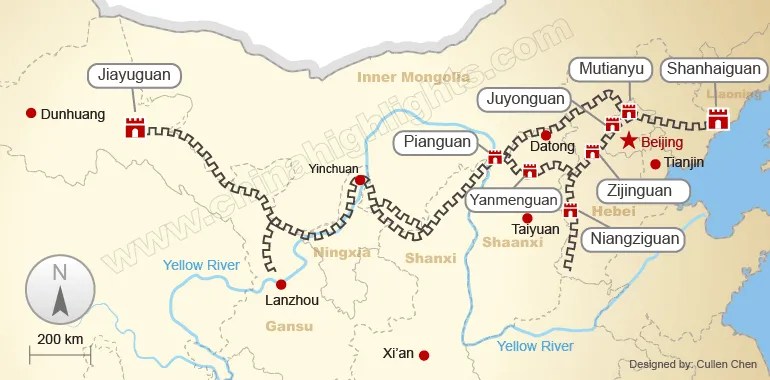
    At the center of this complexity stands the Great Wall, and at its easternmost edge lies the Shanhaiguan Pass—the so-called “First Gate Under Heaven.”


    🏯 Shanhaiguan – Where the Wall Begins, and Civilizations Diverge

    Located in northeastern Hebei Province, near Qinhuangdao City,
    Shanhaiguan marks the starting point of the Great Wall of China.
    Above its gate, the characters “天下第一關” are inscribed:
    “The First Gate Under Heaven.”
    To the Han Chinese, this was the threshold of civilization.
    To northern tribes, it was the entrance to a realm both admired and opposed.

    A place where flatlands meet—a strategic chokepoint not only for armies,
    but for the very idea of who belongs inside and who stays out.


    🧭 Geography Carved Civilization – Inside and Outside the Wall

    Ancient Chinese civilization was defined not only by rivers and dynasties,
    but by the terrain that shaped its boundaries.

    • Inside the Wall: fertile plains and rivers → agrarian Han culture
    • Outside the Wall: mountains and steppes → nomadic and hunting cultures

    This natural divide became a cultural one.
    Those beyond the Wall were called Dongyi, or “eastern barbarians.”
    Among them were the ancestors of the Korean people:
    the Yemaek, Malgal, and Jurchen tribes.

    The Great Wall and Shanhaiguan on the far right

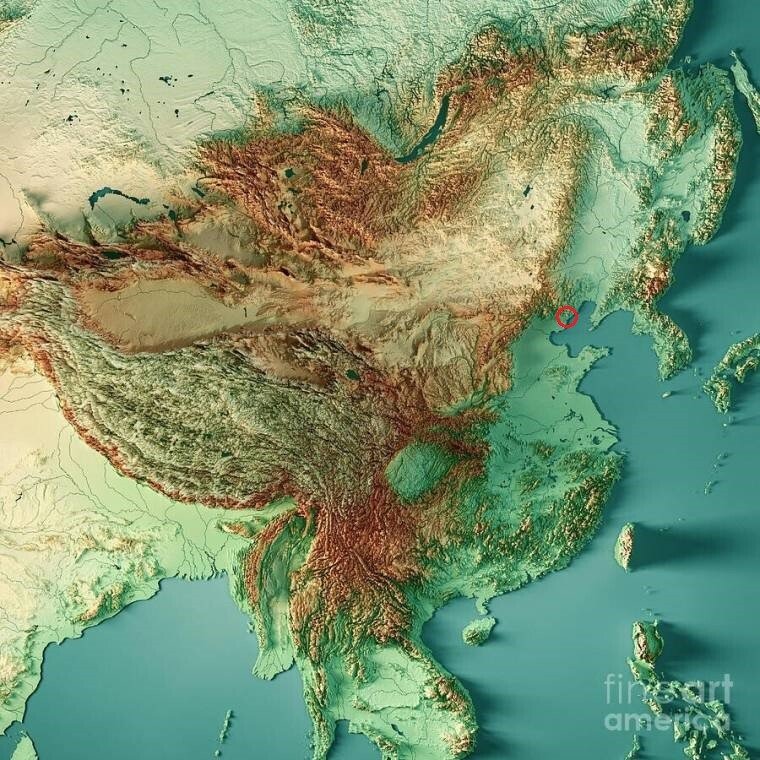
    Shanhaiguan (red circle) where two huge plains connect / The green circle in the middle of the map is the Sichuan Basin where Liu Bei’s Shu Kingdom was located


    🐉 Chiyou vs. the Yellow Emperor – A Mythic Divide

    In Chinese legend, Chiyou, a warrior-king of the eastern tribes,
    waged a great war against the Yellow Emperor, the forefather of the Han.
    More than a myth, it reflects a real tension:
    a power struggle between civilizations—not just nations.

    Koreans never referred to our ancient kings as Emperors.
    We called them Heavenly Kings, descendants of Chiyou.
    This distinction matters—it speaks to differing origins of authority and worldview.


    🐚 Forgotten Civilization in the Liao River Basin – Hongshan Culture

    Outside the Wall, in the Liao River basin, lies one of the most ancient cultures discovered in East Asia:
    the Hongshan Culture (紅山文化)—predating the Yellow River civilizations.

    With its goddess statues, jade artifacts, bear totems, and tiered altar-shrine-tomb complexes,
    Hongshan culture resonates deeply with Korean foundational myths, such as Dangun.
    While modern China claims Hongshan as part of its history,
    its cultural legacy is more visible and alive in Korea.

    Culture survives through memory and practice—not land alone.
    The true inheritor is the one who remembers.


    🕊️ Boundaries and Fusion – What the Gate Divides, and What It Opens

    Geography sets borders.
    But borders can divide—or connect.

    If China claims to embrace the histories of the Manchu, Mongols, or Tibetans,
    then it must also acknowledge the legitimacy of their cultural trajectories.
    And if it insists on seeing history only through the lens of the Han majority,
    then its grand multicultural narrative begins to collapse.

    I respect Chinese culture, deeply.
    But I also wish to view it with fairness, clarity, and context.
    Not through forceful inclusion or exclusion,
    but by asking:

    “What did the First Gate under Heaven really keep out—and what did it let in?”

    That single question invites us to rethink
    the flow of geography, civilization, and memory.

    Enjoyed the post?
    ☕ Support me here → Buy Me a Coffee
  • Summer vacation season has officially begun.
    But flight prices? Yeah… they’re already sky-high.
    It’s easy to feel overwhelmed, especially if you haven’t booked anything yet.

    That’s when I always turn to Skyscanner – the tool I trust most as a spontaneous, flexible traveler.


    ✈️ So What’s So Good About Skyscanner?

    Skyscanner is a flight search engine that compares prices from airlines and travel agencies around the world.
    Just enter your departure and arrival cities, and boom — dozens of flight options roll in.

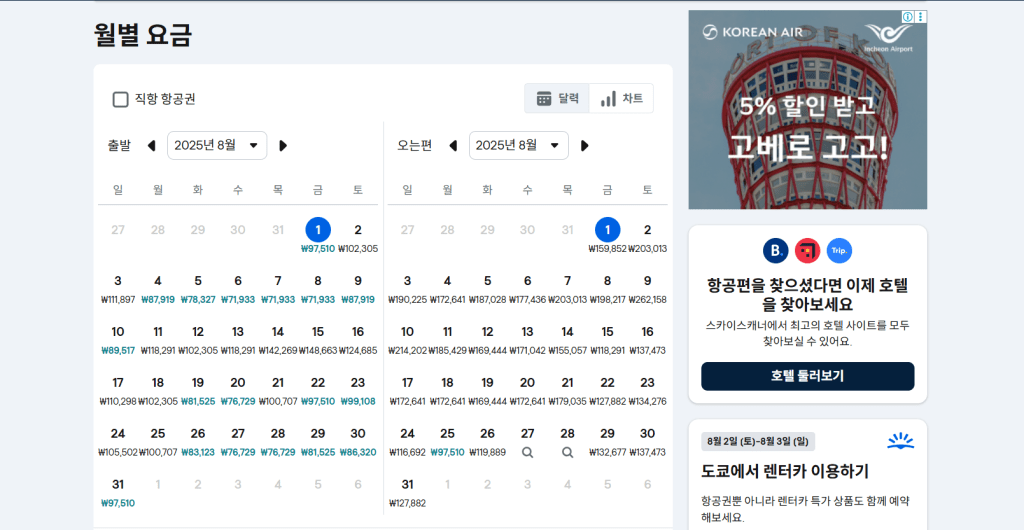
    But what I love most isn’t just the search… it’s the smart calendar feature.


    ✅ Best Price Calendar

    “Which day should I fly to get the best deal?”

    Skyscanner answers that in one glance.
    The calendar shows the lowest prices by date, across a whole month.
    That means you don’t have to pick a date first — you pick based on the best deal.

    You can easily mix and match the departure and return dates for the cheapest combo.


    (Example: combining departure and return flights to Tokyo) korean version

    ✅ Mix & Match One-Way Flights

    Another big win: Skyscanner isn’t just about round trips.
    It lets you search and book one-way tickets freely.

    For example:

    • Fly out with Korean Air early in the morning
    • Fly back late at night with AirAsia at a better price

    You’re in control — match your flights to your schedule, not the other way around.
    And even if the algorithm shows the cheapest pair, you can always pay a bit more to adjust flight times.

    (Insert your Tokyo flight combo screenshot here if needed)

    This kind of flexibility is hard to find with traditional travel agencies.

    Sometimes the round-trip options all fly at awkward hours — so customizing departure and return separately makes all the difference.

    Just note: on rare occasions, I’ve had to tweak the return airport filter (like choosing “Incheon” manually), so keep an eye on that.


    🧠 Flight Prices Rising Mysteriously? Try Incognito Mode

    Ever heard the rumor that flight prices go up the more you search for them?

    It’s a common belief — and while there’s no hard proof for all platforms,
    some sites might adjust pricing based on repeated searches.

    So here’s a little trick:

    📌 Use Incognito Mode when searching flights!

    Keyboard Shortcuts:

    • Windows: Ctrl + Shift + N
    • Mac: Command + Shift + N

    It doesn’t always make a difference…
    but honestly? Even just for peace of mind, it’s worth doing.

    (But hey, I’m the kind of guy who just books it anyway 😎)


    🧳 It’s Not Too Late Yet

    If you’re reading this and still haven’t booked your summer getaway — don’t worry.
    It’s not too late.

    With Skyscanner, you can:

    • Compare real-time prices
    • Use the calendar to find the cheapest travel days
    • Build your own itinerary using flexible one-way combos

    You might be surprised at how affordable and smart your trip can still be.

    Check it out now —
    Because sometimes, a great summer starts with just a good flight.


    🌍 Want to Know How I Record My Trips?

    Here’s another tip I love to share:

    👉 How I Traveled the World Using Google Maps – A Personal Journey Marked with Stars

    A fun way to turn your trip into a visual memory long after the flight’s over.

  • “Do you know about Goguryeo’s Cheolli Jangseong?”
    When I asked ChatGPT, it confidently answered:
    “It’s a wall stretching from the Chongchon River to the Amnok River.”
    But wait—
    That’s Goryeo’s wall, not Goguryeo’s.


    The Name We Forgot to Remember

    Most people, when they hear Cheolli Jangseong (천리장성, “Thousand-Li Wall”), instantly think of Goryeo, not Goguryeo.

    But historically, Goguryeo also built a thousand-li long fortification,
    stretching from Biseong Fortress (near modern-day Dalian, China) to Yodong Fortress (Liaoyang area),
    hugging the ridgelines of Manchuria’s rugged terrain.

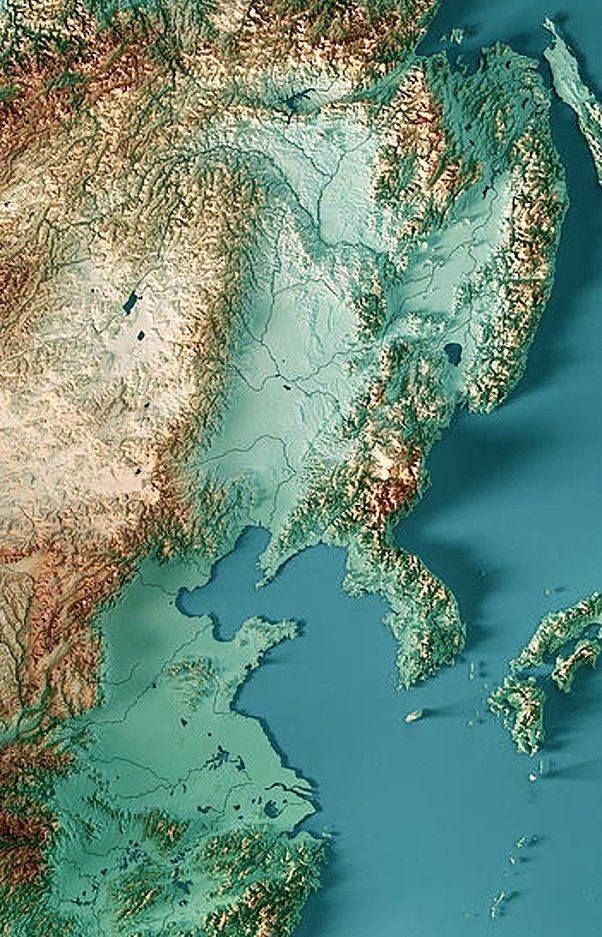
    Below these mountain ridges lie the vast and fertile plains of Songhua and Liao Rivers
    a perfect base for supply and defense.
    The wall wasn’t just defense—it was a geostrategic masterpiece.

    A topographical map of Manchuria with added three-dimensionality.

    Goguryeo’s Great Wall of China (red) and Goryeo’s Great Wall of China (blue)

    A Map That Finally Made Sense

    Here’s the kind of map I was hoping for—
    terrain color-coded with elevation,
    revealing why the plains of Manchuria are called “plains” at all.

    As a kid who obsessed over social studies atlases,
    I couldn’t help staring at it for a while.


    🤖 AI Gets It Wrong (and That’s the Point)

    Why did ChatGPT give the wrong answer?

    Because nobody really talks about Goguryeo’s wall.
    It’s hardly mentioned in textbooks, search engines, or popular content.
    Even AI learned to forget what we forgot.

    It was a minor moment, but telling:
    I asked for a Manchurian topographic map, and it offered a version labeled “Sea of Japan”
    —which any Korean would find problematic, since we refer to it as “East Sea” due to long-standing naming disputes.

    🏞️ Where Mountains Defended and Plains Sustained

    The Cheolli Jangseong began near modern-day Dalian (Biseong Fortress),
    traced the mountain spines,
    and stretched all the way to the Yodong area, deep within Liaoning Province.

    Looking at topographic maps,
    you can clearly see that it was not just a wall,
    but a natural border—leveraging ridges and valleys for defense,
    while securing the fertile land below for logistics and settlement.


    💭 Rethinking Manchuria

    Seeing this again, it’s clear why the flatlands of Manchuria were hotly contested.
    Controlling the region meant controlling a vast resource base.
    Whoever held the plains likely held power.


    🕊️ Dalian, and a Poet We All Know

    When I saw Dalian on the map, I paused.
    That’s where Yun Dong-ju, one of Korea’s most beloved poets,
    spent his final days—imprisoned in Lüshun Prison during the Japanese occupation.

    His name is etched into every Korean heart,
    not just for his verses, but for the quiet resistance they embodied.

    How haunting, then,
    that the city marking the start of Goguryeo’s ancient wall
    is also where a modern symbol of Korean resistance passed away.

    The wall and the prison.
    Stone and soul.
    Past and present resistance—intertwined in one forgotten place.

  • Lately, I’ve been watching a Korean travel show called “Born to Travel the World” (태어난김에 세계일주),
    and I’m constantly amazed by how perfect the BGM choices are.
    In the latest season, they played “Ashitaka Sekki” by Joe Hisaishi (from Princess Mononoke),
    and wow… it was such a perfect fit for the scene that I literally got chills.
    That moment where nature overwhelms you into silence—
    the music echoed that emotion with absolute precision.

    Another one was from a previous season called “Born to Music Travel” (태어난김에 음악일주).
    They used “Top of the World” by The Carpenters
    a song almost everyone knows,
    but one that makes you go, “Wait, what was this called again?”
    It’s one of those songs that feel familiar but suddenly sound brand new.
    I remember searching for it like crazy,
    even using Naver’s music search function to track it down. (Yes, that desperate. 😂)

    And recently, the YouTube algorithm brought me back to another gem:
    “Tokyo Sky” (東京上空) from the Suzume OST.
    That repeating guitar loop,
    the uneasy calm beneath it—
    it completely pulled me in.
    Especially with all the news about earthquakes in Japan this July…
    there was something eerily immersive about it.
    My chest felt heavy in the best way.


    I wonder if we all have songs like that—
    music we buried somewhere deep in our memory.
    Maybe you have one too,
    a song you suddenly need to hear again.

    Whether it’s a certain season or a quiet scene from daily life,
    somewhere, that song might be waiting to return—
    quietly, gently, at the right time.


    ℹ️ Note

    “Born to Travel the World” (태어난김에 세계일주) and
    “Born to Music Travel” (태어난김에 음악일주)
    are Korean TV programs known for their stunning visuals and incredible use of background music (BGM).

    Enjoyed the post?
    ☕ Support me here → Buy Me a Coffee
  • 🧍‍♂️ Who Is the “Fun-Cool-Sexy” Guy?
    The term Fun-Cool-Sexy Guy (ファン・クール・セクシー座) originated from a Japanese man’s self-introduction video.
    He seriously described himself as “fun, cool, and sexy,”
    and the unexpected combination of confidence and sincerity quickly made him a meme icon online.

    (Side note: He’s reportedly now working in Japan’s rice reserve operations – yes, really.)

    This post has no political stance—
    I just wanted to share some of his statements and the hilarious parodies that followed,
    because they cracked me up just by reading them 😂


    🎤 Actual Quotes from the Original “Fun-Cool-Sexy” Guy

    僕はファンで、クールで、セクシーです。
    I am fun, cool, and sexy.

    僕は誰よりも踊る準備ができています。
    I’m more ready to dance than anyone else.

    僕は優しい心を持っています。
    I have a kind heart.

    人間の底が見えてしまったら、もう人間じゃないと思います。
    If you see the bottom of a human being, they’re no longer human.

    → These lines were said with full sincerity,
    but the awkward phrasing and excessive confidence make them unintentionally hilarious.


    🤪 Parody Quotes That Followed

    As the meme spread, netizens began posting their own “obviously true but completely useless statements,” like:

    • I am my mother’s child.
    • I went to a class reunion and saw my classmates.
    • I ate food and felt full.
    • I walked forward and moved forward.
    • I cracked an egg and found a yolk inside.

    → All technically true, yet totally unnecessary.
    And that’s what makes them so funny.


    As for me? My own attempt at this style might be:
    “I closed my eyes, and I couldn’t see.” 🤓

    Enjoyed the post?
    ☕ Support me here → Buy Me a Coffee
  • “What kind of person am I?”
    It’s an age-old question—familiar to everyone, yet never easy to answer.

    We turn to personality tests, ask our friends for feedback, keep journals, or try to observe ourselves more consciously.
    These days, some people ask this question to artificial intelligence.
    I’m one of them.

    When writing personal statements (like résumés or job application essays), or simply trying to make sense of my thoughts,
    I often ask ChatGPT to help me organize what I’ve said and done.

    Through those conversations, GPT identifies the patterns in how I speak, the choices I make, the words I repeat—
    and sometimes, it offers an unexpectedly accurate mirror of who I might be.


    💬 Why ask an AI about me?

    This isn’t some deep psychological analysis, nor do you need to “believe” in artificial intelligence.
    It’s more like handing over your scattered notes and asking for a summary.

    ChatGPT doesn’t understand me like a human would.
    But it’s surprisingly good at spotting recurring themes, behavioral trends, and consistent perspectives
    within the words I’ve shared.

    Sometimes it sounds like:
    “Seems like you think this way.”
    “Maybe this is something you value.”
    In that sense, it becomes less of a robot, and more like a linguistic mirror—quietly reflecting your patterns back to you.


    🧭 How should I ask questions?

    GPT handles vague or one-word questions poorly.
    But if you give it context + a question, it starts to shine.

    Here are some prompts that worked for me:

    • “I had this experience. What strength or trait does it reveal about me?”
    • “I keep making this kind of decision. What might that say about my personality?”
    • “I tend to express myself like this. Where do you think that’s coming from?”

    After a few back-and-forths,
    ChatGPT starts to suggest:
    “You might be someone who moves this way, and cares about that kind of thing.”

    It’s never definitive—but it’s often surprisingly close.


    ⏳ How much data is enough?

    In my case, it didn’t take hundreds of conversations.
    A handful of personal stories, a few questions about how I act or think, and
    suddenly GPT had enough to “get a feel” for me.

    It’s not like a personality test with neat categories.
    But sometimes, the response feels like something a close friend might say:
    “You kind of seem like this kind of person, right?”


    🪺 GPT’s one-line summary of me:

    🐦 “A gray-feathered pigeon who listens carefully and patiently gathers stories.”

    Gray is quiet and balanced.
    The pigeon isn’t flashy—it simply adapts, remembers familiar faces, and always finds its way,
    even in crowded places.

    That felt weirdly accurate.


    🎁 Final thoughts

    GPT isn’t perfect.
    But when it listens to your words and reflects them back in a structured way,
    it becomes an unexpected companion in understanding yourself.

    You don’t need a big question to begin.

    Try:

    “Why do I keep doing this lately?”
    “What do you notice in how I describe things?”

    And once you speak,
    GPT listens.
    Ask clearly, and it might just answer clearly, too.


    Coo coo coo coo coo. (That’s a gray pigeon cooing softly. 🐦)

    📝 P.S.

    This post isn’t perfect.
    It’s more like a whisper than a declaration—so feel free to just skim through it.
    Maybe it’ll leave a faint echo you’ll come back to later.

    Enjoyed the post?
    ☕ Support me here → Buy Me a Coffee

  • I recently picked up something called a “Mystic Peach” at the local supermarket.
    Apparently, it’s a newly developed variety of peach here in Korea.

    The name caught me off guard—Mystic? It felt like a name trying a bit too hard.
    But right then, a wave of peach-related memories started flooding back.

    There are so many types of peaches.
    Here in Korea, the most common are Baekdo (white peach), Hwangdo (yellow peach), and Cheondo (nectarine).
    Each has its own personality—white peaches are firmer and paler, yellow peaches are softer and golden, and nectarines tend to be more tart and crisp.
    Since childhood, peaches have always symbolized summer for me.

    The juice trickling down my wrist, the soft aroma in the air,
    and that gentle, quiet sweetness that lingers in the mouth—
    Not too much, not too bold. Just right.
    That’s exactly why I’ve always loved peaches.

    But peaches aren’t just about taste.
    In Korean culture and beyond, they carry symbolism and stories.

    In the Chinese epic Romance of the Three Kingdoms, there’s a famous scene called “The Oath of the Peach Garden,”
    where three warriors swear brotherhood beneath a peach tree—
    the tree itself symbolizing loyalty and sacred bonds.

    There’s also a quirky memory tied to a Korean drink called “2% 부족할 때” (When You’re 2% Short).
    It was a light, peach-flavored soft drink that was wildly popular in the early 2000s.
    Even the name itself captured a certain feeling—like the peach flavor was always just subtly there, never overwhelming.

    Interestingly, in traditional Korean ancestral rites, peaches are not placed on ceremonial tables.
    Why? Because peaches were believed to ward off spirits,
    and inviting ancestors back home while putting out a spirit-repelling fruit would’ve been… well, awkward.
    So they were left out—delicious, but spiritually inconvenient.

    I also used to live in a village called Shin-an-ri (神安里)
    the name literally means “peace for spirits”.
    It was said to be a place with strong yin energy.
    Ironically—or maybe perfectly fitting—the region’s specialty was peaches.
    People said peaches were planted there deliberately to keep things “balanced,” if you know what I mean.
    Strangely enough, they really were the tastiest peaches I’ve ever had.
    I still don’t know if that was just coincidence or a touch of fate.

    And of course, I can’t forget the last peach-related story of them all—ordering canned yellow peaches (hwangdo) at a bar.
    If you’ve ever done this in Korea, you’ll know the drill.
    There’s always someone who says: “Why are you paying for that?”
    But still, you order it.
    A cold slice of syrup-soaked peach after a few shots of soju hits just right—
    like biting into the tail end of summer.

    All of this came back to me because of one “Mystic Peach.”
    Funny how a new fruit can awaken such old memories.
    To me, peaches aren’t just fruit.
    They linger longer in the heart than in the mouth.
    And sometimes, they even make you pause and look back at where you’ve been.


    💬 Do you have a peach-related memory or story?
    Whether it’s about your favorite variety, or your own “Mystic Peach moment,”
    I’d love to hear it in the comments! 🍑

    Enjoyed the post?
    ☕ Support me here → Buy Me a Coffee

  • After each trip, we often come back with lots of photos—
    but the memories of “where exactly we went and how we got there” tend to fade quickly.

    That’s why I use Google Maps whenever I travel.


    📍 Leaving My Footprints on the Map

    The image below shows a snapshot of my personal travel history,
    carefully marked on Google Maps over the years.

    (Oh, sorry, this is a Google korea map.)

    Each star on the map represents a place I visited—
    a moment, a memory, a story.

    Here’s how I use it:

    • I search for places using Google Maps
    • Save interesting spots by tapping the ⭐️ star
    • Organize them into custom lists by region or travel day (like Day 1, Day 2, etc.)
    • Group nearby places to plan efficient daily routes

    While traveling, I check:

    • 🚉 Transit routes and walking distances
    • 📍 Reviews from locals and other travelers
      It really helps me tune into the rhythm of the country I’m exploring.

    After the trip, the stars remain—
    like a digital scrapbook on the map.


    🤔 Why Google Maps?

    • It works anywhere in the world
    • Combines landmarks, navigation, saved lists—all in one place
    • Great for route planning and organizing your trip
    • Longer-lasting than photo albums, because it’s location-based

    In some places like China, it may be restricted (I used Baidu Maps back then),
    but in most countries, Google Maps is the most accurate and comprehensive tool you can use.


    🇰🇷 That One Time I Used Naver

    While traveling in Hong Kong,
    I was trying to find a local restaurant using Google Maps,
    but I suddenly felt tired of interacting with strangers.

    So, I opened Naver (Korea’s local search engine)
    and typed something like “Best restaurant in Hong Kong.”
    When I got there—unsurprisingly—there were other Korean travelers too.

    I didn’t end up having soju together or anything,
    just exchanged a quiet smile.
    But there was a subtle comfort in the familiarity.

    After that?
    Well, the “local fever” hit me again,
    and I went straight back to Google Maps 😄

    (FYI: Naver is South Korea’s primary search platform, mainly focused on Korean-language content.)
    (“Local fever” here means a traveler’s desire to dive deep into authentic local culture and experiences.)


    🔁 It’s All About the Choice

    • Google helps you experience the world.
    • Naver reminds you of home.

    If you want to truly feel a new city → Use Google
    If you want faster, Korean-focused results → Use Naver
    If you want to leave your journey marked behind → Definitely Google


    🌟 Final Thoughts

    Even now, after each trip,
    I still add stars on Google Maps.

    As I revisit those locations,
    I remember the weather, the sounds of the streets, and who I was with.

    Don’t just leave memories in your camera roll—
    Mark them on your map.

    Each star becomes
    a tiny universe of your own.

    It almost feels like getting a passport stamp,
    but in a digital, more personal way.

    I’ve even started choosing my next destinations
    by connecting the dots between starred places.

    And honestly,
    I just want to leave more traces on this map of the world. 🌎✨

    Enjoyed the post?
    ☕ Support me here → Buy Me a Coffee

  • Have you ever stumbled upon the Korean terms “에겐남 (Egen-nam)” or “테토녀 (Teto-nyeo)” while browsing social media or blog posts?
    At first glance, they might sound like game characters or internet nicknames—but they’re actually popular new slang words in Korea, reflecting modern views on gender expression and personality.

    Let’s break them down.


    🧔 에겐남 (Egen-nam) = Estrogen + 남자 (man)

    The word 에겐남 is a blend of “estrogen” and “namja”, the Korean word for man.
    While estrogen is typically referred to as a “female hormone,” it also exists in males in small amounts.

    In Korean slang, an “에겐남” refers to:

    • A man with a soft and emotional personality
    • Someone who communicates with subtlety and care
    • A person whose appearance or vibe leans toward a gentle, androgynous aesthetic

    👉 Think of a guy who asks, “How are you feeling today?” instead of brushing things off.
    👉 Or someone who quietly makes sure you’re okay, without making a big deal of it.

    In short, he’s not the macho, tough-guy stereotype—he’s empathetic, calm, and emotionally intelligent.


    👩 테토녀 (Teto-nyeo) = Testosterone + 여자 (woman)

    테토녀 combines “testosterone” and “yeoja”, which means woman in Korean.
    Although testosterone is known as a male hormone, women naturally produce it as well.

    A “테토녀” typically describes:

    • A woman who is confident and assertive
    • Someone with strong leadership and bold energy
    • A person who might look cute but talks like a boss

    In modern terms: girl crush energy 💥
    She might casually say “Let’s go.” in a deadpan tone—but she’s also the one who has your back, handles things, and gets things done.


    🔄 What these words are really saying

    Why are these words trending in Korea?

    Because they reflect a shift in how people see gender.
    Instead of boxing men and women into traditional roles, these terms embrace the idea that:

    • Men can be gentle, emotionally aware, and nurturing
    • Women can be bold, driven, and unafraid to lead

    These expressions don’t just describe people—they celebrate complexity, balance, and personality beyond stereotypes.


    ✍️ A personal note

    Back in high school, I was the kind of kid who got a custom class t-shirt with “Estrogen” printed on the back—yep, that was me in an all-boys school 😆

    Later in college, I even served a semester on the Women’s Student Council.
    And you know what? Those experiences taught me that understanding and respect aren’t about roles or hormones—it’s about being open to people, as they are.

    Whether you’re an “Egen-nam” or a “Teto-nyeo”—
    It’s not about the label, but about recognizing all the facets that make someone unique.

    Enjoyed the post?
    ☕ Support me here → Buy Me a Coffee