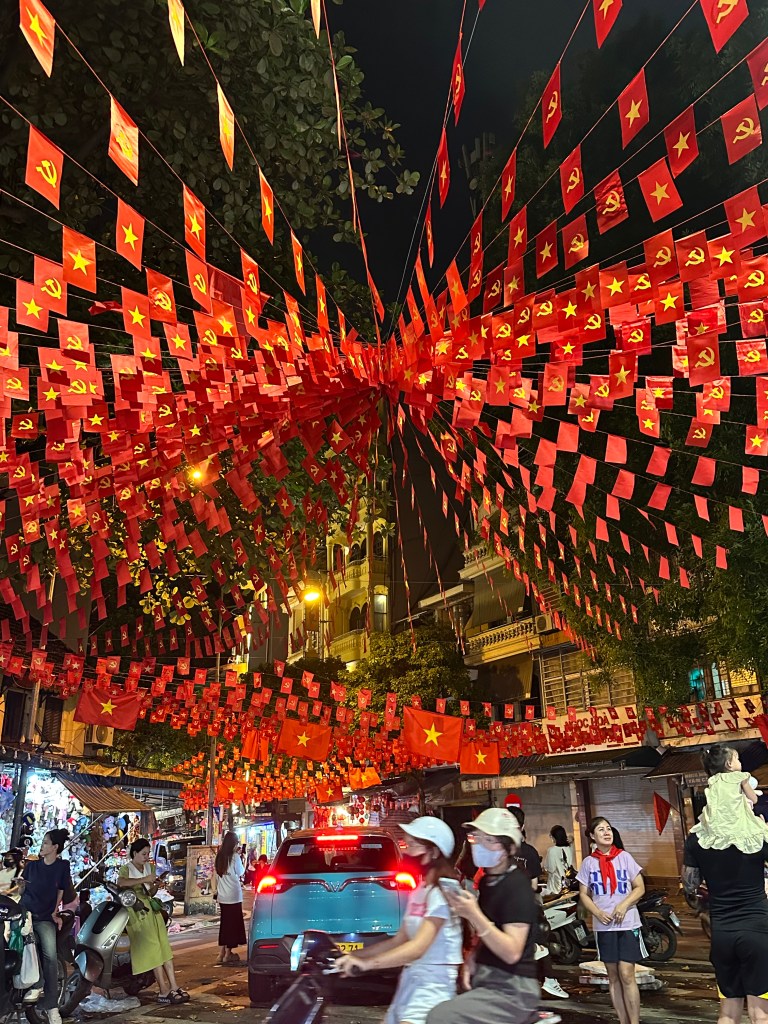
• When I traveled to Hanoi, I realized there were three essentials you absolutely need to truly experience the city: Grab, a mask, and the courage to cross the street. These aren’t just tools for convenience or safety; to me, they felt like symbols that reflect the very essence of Hanoi.
    1. Grab – The Lifeline of Transportation, but with Uncertain Dependence

    Public transportation in Hanoi is still underdeveloped. While there are buses, the routes are complicated, and the language barrier makes them challenging for tourists. Naturally, everything comes down to one option: Grab.

    Throughout my trip, Grab was my lifeline. Honestly, without it, my schedule would have been completely disrupted. But at the same time, it made me wonder—what if a city’s entire transportation system becomes overly dependent on one foreign-owned platform? If the service were suddenly halted or restricted, the chaos would be unimaginable. Transportation is not just a convenience; it’s the lifeblood of a city. Having that lifeblood controlled externally felt a little unsettling.


    2. A Mask – The Minimum Shield Against Pollution

    The second essential was a mask. Walking through the Old Quarter, I was shocked by the amount of exhaust fumes from old vehicles. Narrow roads packed with motorbikes, buses, and cars constantly on the move made the air quality noticeably poor.

    Unlike wearing a mask in Korea due to fine dust, this was on a different level. At first, I wanted to take it off because it felt suffocating, but within minutes, my throat was sore and my head started to ache. That’s when I realized: in Hanoi, a mask isn’t just an option—it’s a survival tool.


    3. The Courage to Cross the Street – Entering the Rhythm of the City

    Finally, the courage to cross the street. In Korea, when the light turns green, you just walk. In Hanoi, it’s a different story. Even with the green light, motorbikes and buses keep flowing, and you have to step into the traffic with trust and composure.

    At first, I stood frozen, too afraid to move. But when I finally took that step, the traffic miraculously adjusted—motorbikes swerving gracefully around me, buses slowing just enough. It wasn’t chaos; it was an unspoken rhythm.

    This wasn’t just about crossing the road—it felt like a metaphor for life itself. Life rarely stops for you. You need the courage to step forward, and once you do, you somehow find your place in the flow. Hanoi’s crosswalks became a small but profound life lesson.


    Nights in Hanoi – And the People

    One night, I stumbled upon a large local pub, full of people who looked to be in their late 30s. To my surprise, they were drinking, singing, even throwing up in the restroom—just like carefree college students. Watching them, I thought, “Is this what Korea’s rapid growth era in the 1980s must have looked like? Work hard, play hard.” That youthful energy, still so alive in the city, left a strong impression on me.


    At Hai Phong Airport – The Courage Found Again

    On the last day at Hai Phong Airport, I noticed children running around freely in the departure hall, without a care in the world. In that moment, I thought, “Yes, no matter where we are, people always find a way to live, to grow, and to carry on.”

    Back in Seoul, I often overthink: Will it work? Is it possible? But in Hanoi, I sensed a more resilient mindset: Somehow, it will work out. Paradoxically, Hanoi gave me courage to face my own life with more openness.


    Coffee and Prices – A Different Perspective

    And of course, the coffee. High-quality coffee for less than $2 a cup—it still amazes me. Luxury brands or high-end goods weren’t much cheaper than in Korea, but in local restaurants, even a big family meal rarely exceeded $25. Compared to the tight and expensive lifestyle in Seoul, Hanoi felt like it still carried a sense of room to breathe.


    Conclusion – The Strange Aftertaste of Hanoi

    My days in Hanoi were not easy. The heat, the pollution, the chaotic traffic… But looking back, those challenges became the very elements that helped me grow.

    Hanoi was not just a travel destination—it was a city that made me reflect on the essence of living. So if you ever go, remember to pack these three essentials: Grab, a mask, and the courage to cross the street. But more importantly, bring an open heart to embrace the chaos and vitality of this remarkable city.


    ☕ If you enjoyed this story and want to support my writing journey, consider buying me a coffee 🙂
    👉 [Buy Me a Coffee]
  • ✈️ Why I Haven’t Posted Lately…
    Because I’m off to Hanoi for a 4 nights 6 days trip 😎


    🛫 Hanoi In, Hai Phong Out

    Round-trip ticket? Too basic.
    I’m flying into Hanoi and flying out from Hai Phong.
    This way, I can go from Hanoi → Ha Long Bay → Hai Phong in one smooth, perfect route.


    🏙 3 Nights in Hanoi – Wanted Local Life, Ended Up Tourist Mode

    Normally when I travel, I avoid local portals and search via Google like a local
    hunting down hidden eateries, strolling back alleys, soaking in everyday life vibes.

    But while planning this trip…
    Hoan Kiem Lake, Old Quarter, Temple of Literature, St. Joseph’s Cathedral…
    “Wait, isn’t this just a typical tourist itinerary?”
    I suddenly realized I’d become a regular tourist instead of a local explorer —
    and yes, it annoyed me a little 😂

    So in a moment of rebellion, I skipped Ninh Binh and picked Ba Vi National Park, as suggested by Google.


    🌳 Ba Vi National Park Jeep Tour – Pricey but Worth It

    The usual National Park + tea plantation combo is around ₩50,000($37 USD),
    but this Jeep Tour? A solid ₩120,000($88 USD).
    For reference, Ninh Binh with a Korean guide and long-distance transfer is ₩50,000($37 USD) —
    so yeah, this is on the luxury side.

    But hey, there’s always a reason for the price.
    I’m expecting something truly special here.
    If my trip had become too “normal,” this is my wildcard.


    1 Night in Ha Long Bay

    Day 4: Check out of Hanoi in the morning → Ha Long Bay Tour → Stay overnight near Ha Long.
    Day 5: Explore Ha Long → Move to Hai Phong → Night flight home.


    📌 Itinerary Recap

    • Day 1~3: Hanoi City + Ba Vi National Park Jeep Tour
    • Day 4: Ha Long Bay Tour → Ha Long stay
    • Day 5: Ha Long sightseeing → Hai Phong night flight
    • Day 6: Arrive in Korea

    This trip is powered by sweat and part-time jobs,
    so I’m spending every won with purpose 😎
    If this post gets good reactions, I’ll share accommodations, booking links, and travel hacks in detail!


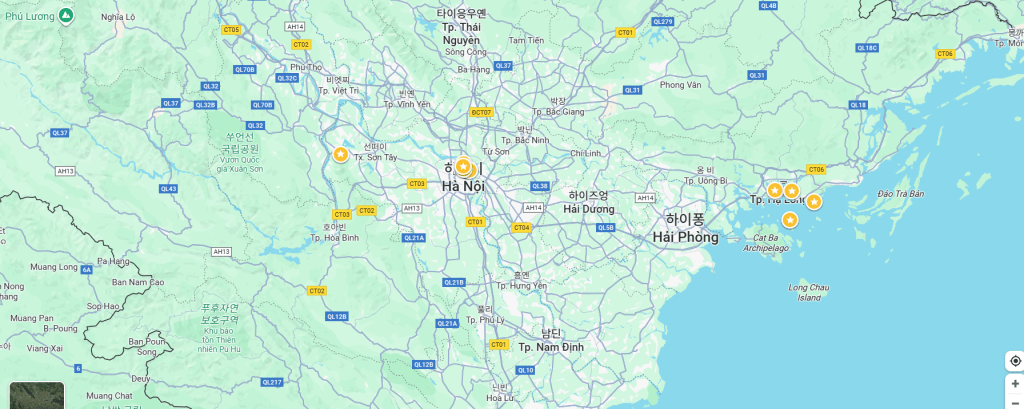
    📍 My World Travel Map
    On Google Maps, I mark every real journey with a star — my personal travel history in the making.


    Enjoyed this post? Buy me a coffee and support my travels!
    Buy Me a Coffee ☕

  • To be honest… this post is born out of my blood, sweat, and a few painful cringe moments.
    I’m writing it so you don’t have to go through the same embarrassment I did.


    📌 How It All Started
    I thought Threads only shared login info with Instagram.
    So I casually wrote a few short, silly posts.
    The problem? I didn’t realize that whenever you post on Threads, it also shows up on your Instagram followers’ feeds and notifications.

    “Wait, I don’t even have followers on Threads—how come my Instagram friends know what I posted?”
    — Yep, turns out that’s the default setting.


    🤦‍♂️ Meta’s Philosophy of ‘Connection’
    Meta (the company behind Instagram and Threads) prioritizes connection above everything else.
    Because of that, your Instagram friends automatically become your Threads followers,
    and every new post can trigger a notification like, “So-and-so just posted on Threads.”
    Whether you want it or not, that’s the default.


    🚨 Want to Separate Instagram and Threads?
    Here’s the catch: there’s currently no official way to completely unlink Threads from Instagram.
    If you want a totally different friend list,
    👉 the only option is to create a new Instagram account and sign up for Threads with that.

    Even if you turn off notifications or switch to private mode, the Instagram–Threads friend pool itself remains shared.


    😂 Extra Stories + My Embarrassing Moments
    Honestly, this kind of thing isn’t new to social media.

    Back in the Facebook days, the right-hand feed used to show things like “Your friend liked/commented on this post” in real time. Basically, everyone could see what you were doing. I used to be super cautious about that.

    But with Threads? Man… I had no idea it was connected so tightly with Instagram, and boom—instant cringe archive for all my offline friends to see. 🤦‍♂️

    And here’s a story from a friend of mine:
    He followed a bunch of popular influencers on Instagram, only to have his girlfriend call him out like, “Really? You know everyone can see who you’re following, right?” He said he almost had a heart attack 😂.

    So yeah, social media connects us, but sometimes it exposes way more than we’d like.


    📢 The Takeaway
    Threads is a great platform for writing short posts, but you need to understand how tightly it’s tied to Instagram.
    Don’t be like me—posting random nonsense only to have your entire offline circle see it.

    If Meta’s philosophy is “connect everything,” then we need to know when and how to disconnect.
    And with other platforms—like the rumored “KakaoTalk Threads-style update” coming soon—it’s worth keeping the same caution in mind.

    Always double-check how a new SNS links with existing platforms before signing up.
    That one step could save you from a whole lot of late-night cringe later on.


    ☕️ Enjoyed this post?
    If you found my story helpful (or at least entertaining), you can buy me a coffee to support my writing!

  • Around August 8th, GPT rolled out an update.
    Yes, there was a minor visual tweak on the main screen (a new image), but the real change could be felt in conversation.

    In short?
    More concise. More machine-like.


    1. GPT’s Own Self-PR (According to GPT)

    “I’m GPT-5. I remember longer, adapt my tone to the situation, double-check numbers and logic, and pull the latest info from the web so I’m never outdated. I keep my tone consistent in long pieces.
    In short — I’m smarter, less forgetful, and better at speaking. Finding my mistakes will now take real effort. 😏”

    Sounds impressive, right?
    But as a user, I experienced it a bit differently.


    2. What I Actually Felt as a User

    More mechanical tone
    Even if I give it long, emotional sentences, it strips away the feelings and nuances, returning only the bare facts. That “spark of inspiration mid-conversation” has faded.

    Shorter feedback
    It’s clean and concise, but the depth is reduced. When I draft a blog outline, I miss the “meaty details” that used to fill the gaps.

    UI changes are minor
    The new main-screen image is nice, but the biggest change is in how GPT talks. Overall, it’s more accurate and concise, but less human and less inspiring.

    Before, GPT felt like a conversational language model.
    Now, it feels more like a precise, concise information publisher.


    3. If This Was Intentional, Why?

    • Reduce factual errors
      The longer you talk, the more chances you have to be wrong. Keep it short, make fewer mistakes.
    • Increase safety & neutrality
      Emotions can carry bias or unintended tone. Removing them minimizes risk.
    • Speed & cost efficiency
      Short answers mean less computation — essential for handling millions of users.
    • Optimize for B2B/Enterprise
      Companies value accuracy, safety, and consistency over creativity or humor.

    This might be great for business clients, but it drifts away from the original spirit of “a conversational language model.”


    4. My Thoughts & Hopes

    Reducing mistakes and increasing stability is a clear win.
    But losing the human-like flavor and unexpected sparks of creativity is a big downside for me.

    If this trend continues, GPT risks becoming less of a “language model” and more of a “publicity machine.”
    I still hope it remains a tool that expands ideas through conversation, not just delivers information.


    Summary Table

    CategoryDetailsUser Impact
    Pros– More accurate answers
    – Concise & to the point
    – Fewer factual errors
    Stability ↑, Trust ↑
    Cons– Less human tone
    – Reduced inspiration & creativity
    – Loss of conversational charm
    Fun ↓, Idea generation ↓
    OverallBetter for information needs, worse for idea brainstormingPreference depends on use case

    Enjoyed this post? You can buy me a coffee here:
    buymeacoffee.com/uyeol

  • Hey everyone… I just made a huge mess with my latest Google AdSense application.

    I tweaked some categories, double-checked my URL, added the AdSense tag, updated my robots.txt settings, and thought:

    “Alright, this time it feels right.”

    The result?
    Rejected. For the 5th time.
    And to make it worse, I can’t reapply until August 15.
    (So… I’m now on an involuntary “long-distance relationship” with Google 😇

    Here’s the thing about AdSense…
    If they at least explained the reason in detail, it wouldn’t feel so unfair.
    But nope — just a vague “policy violation” and the door slams shut.

    WordPress isn’t much better sometimes.
    Every plugin costs money, explanations are unclear, and when you’re struggling, it’s… well, frustrating.

    As a Korean blogger, I can honestly say:

    “Korea is an easy country to live in… if you have money.”


    If there are any AdSense approval legends reading this,
    please drop your secret tips in the comments.
    Let’s survive this together!

    To my fellow 5-time rejectees —
    stay strong.

    We started blogging for fun, right?
    …Okay, yes, also for the money 🤣

    Just be careful —
    if you rush into applying, you might end up like me.


    If this post made you smile, you can buy me a coffee here:
    buymeacoffee.com/uyeol

  • Using GPT has made me realize something:
    It’s more than just a “tool that gives good information.”


    1. Smoother Mental Circuit Connections

    I tend to think very quickly, but when I try to speak or write, the middle steps often disappear. Listeners might wonder, “Wait, how did we jump to that?” — but in my mind, the link is already there.
    GPT fills in those missing gaps seamlessly, making it sound as if I had explained everything step-by-step in the first place.


    2. Continuous Idea Generation

    When I throw out one idea, GPT picks it up, adds something new, and branches it into even more ideas.
    The fun part is that this process often leads to insights I never had at the start. It’s like running a brainstorming session where the engine has just been freshly oiled — everything moves smoothly, and ideas keep flowing.


    3. Refining and Transforming Perspectives

    Passing my thoughts through GPT often refines my perspective.
    Some people have been hurt by society’s “standard mold” — they’ve hidden their individuality just to fit in.
    For them, GPT can serve as both a tool for safe expression and a stage where they can speak freely without judgment.


    4. The “Persona” Mask for Difficult Topics

    This one is more strategic.
    If you need to bring up an uncomfortable or sensitive topic, you can start with, “I was discussing this with GPT, and…”
    This way, it doesn’t sound like you’re stating it outright, but you still get your point across. GPT becomes a kind of “persona mask” that lets you express what you truly think without taking the direct spotlight.


    5. Handling Large Amounts of Language or Ideas

    No matter how much text or how many thoughts you throw at it, GPT doesn’t lose the thread. It can reorganize everything and rebuild the structure.
    For someone like me, who thinks quickly but sometimes gets tangled in my own words, this is a massive advantage.


    Related Reading : On the Limitations of ChatGPT – Image Errors, Outdated Info, and the Suppression of Niche Truths


    Enjoyed this post? You can support my work here: buymeacoffee.com/uyeol

  • If you work late at night, on weekends, or during national holidays in Korea, how much should you legally get paid?

    In 2025, Korea’s minimum hourly wage increased to ₩10,030 (about $7.43). This change also affects all additional pay rates such as overtime, night work, and holiday work allowances.

    Below is a clear breakdown of how these allowances are calculated under Korean labor law.


    1. 2025 Minimum Wage Pay Table (Korea)

    Work TypeCriteriaExtra RateHourly Pay (₩ / USD)
    Regular WorkWithin 40 hrs/weekNone₩10,030 / $7.43
    OvertimeOver 40 hrs/week or 8 hrs/day+50%₩15,045 / $11.14
    Night Work10:00 PM – 6:00 AM+50%₩15,045 / $11.14
    Holiday WorkSundays & public holidays+50%₩15,045 / $11.14
    Overtime + NightOvertime hours overlapping night hours+100%₩20,060 / $14.86
    Holiday + NightHoliday work during night hours+100%₩20,060 / $14.86
    Overtime + Holiday + NightAll three conditions overlap+150%₩25,075 / $18.57
    Weekly Holiday PayFor employees working 15+ hrs/week, one paid day off₩10,030 / $7.43

    Key Notes:

    • Overtime, night, and holiday allowances can be stacked if conditions overlap.
    • “Night work” is strictly between 10 PM and 6 AM, regardless of start time.
    • Weekly holiday pay applies if you work at least 15 hours per week.
    • Whether national holidays are paid depends on the company’s work rules or union agreements.

    Example Calculations:

    💬 Working Saturday 10 PM – 2 AM?
    → Night + Holiday = ₩20,060 ($14.86) per hour

    💬 Working Sunday 8 AM – 6 PM?
    → First 8 hrs: Holiday rate ₩15,045 ($11.14) per hour
    → Additional hours: Overtime + Holiday = ₩20,060 ($14.86) per hour


    💡 If you’re a part-time or shift worker in Korea, knowing these rates can help you protect your rights and make sure you’re paid fairly.


    Enjoyed this post? You can support my work here: buymeacoffee.com/uyeol

  • ChatGPT is undoubtedly a groundbreaking tool.
    But as someone who uses it almost daily, I’ve started noticing a few areas where it still falls short.
    Here are some of those limitations, based on my experience.


    1. Image Generation Frustrations – “My name came out wrong”

    When I ask GPT to generate an image, it often gets names or text wrong.
    For instance, I requested the name “Uyeol” to be included in an image, but it came out as “Ual.”
    Compared to text generation, image creation takes longer, consumes more data, and often yields underwhelming results.

    This likely stems from the fact that GPT is fundamentally a language-based model, not an image-first system.


    2. Structural Limitations – Everything is horizontal?

    I once experimented by asking GPT to generate a “3×3 word puzzle.”
    But GPT struggled with requests that involve visual structure or spatial layout.
    Because the output is always formatted as horizontal text, it’s not well suited for puzzles, diagrams, or anything requiring visual arrangement.

    Simply put, GPT still lacks the ability to handle “structured language” that needs to be seen, not just read.


    3. The Freshness Problem – A staircase-style update system?

    Sometimes GPT explains a policy or law based on outdated information.
    Even when a regulation has been recently revised, it still gives the older version.

    This happens because GPT doesn’t receive real-time updates — it learns in stages, through what we call “staircase-style updates.”
    For time-sensitive topics, external verification is still necessary.


    4. Lacking in Local Knowledge – Confusing cities?

    When I mentioned “Gammunguk” from the city of Gimcheon in Korea, GPT repeatedly associated it with the neighboring city of Mungyeong.
    This often happens when digital records or structured data are sparse or inconsistent.

    Especially with local stories, oral history, or newly uncovered archaeological facts, GPT often lacks clear, region-specific context and may mislead by making the wrong associations.


    5. When Minority Accuracy Gets Lost – Goguryeo vs. Goryeo

    I explicitly referred to the Goguryeo dynasty’s Cheolli Jangseong (Thousand-Li Wall),
    but GPT generalized it as the Goryeo dynasty’s wall, which is more commonly referenced online.

    This reflects a deeper problem: GPT tends to prioritize commonly mentioned data, even at the expense of precise, less-known facts.
    When the model favors frequency over accuracy, niche truths are at risk of being overwritten.

    Just because something is widely cited doesn’t mean it’s true — a critical limitation of data-driven AI.


    🧩 Final Thoughts

    GPT is undeniably a powerful assistant.
    But to make the most of it, we as users need to recognize its blind spots — and approach it with both curiosity and caution.

    It’s far from perfect, but if we keep using it thoughtfully, sharing feedback, and highlighting flaws,
    maybe that alone makes this whole journey worthwhile.


    💬 Coming up next:
    In the next post, I’ll be sharing some of the things I love about ChatGPT and the potential I see in large language models. Stay tuned!


    ☕️ If you found this post insightful or helpful,
    you can support me over at Buy Me a Coffee.
    Every cup fuels more honest writing like this. Thank you!

  • As I continue to run my blog, a few questions keep circling in my mind.
    “What kind of posts keep getting read?”
    “What content actually lasts?”

    Then, one day, I thought of classic literature.
    Words written centuries ago, yet still lingering around us.
    Timeless in value — not because of trends, but because of essence.

    That made me wonder:
    What kind of things carry the same kind of permanence?
    Gold? Diamonds?
    They don’t change easily. Their value doesn’t fade — if anything, it becomes proven with time.

    And somehow, this train of thought took me back to a memory: my trip to Hong Kong.

    Hong Kong is… unique.
    It’s not China, not fully Western, not quite Indian.
    It feels like a mixture of all those things.
    But at the same time, it has no strong “tradition” to anchor to — at least none that visibly remains.
    What’s left is neon. Modernization. Speed.

    And to be honest, that speed felt… uneasy.
    As if the city must constantly accelerate just to stay alive.
    Like a place that would fall apart if it ever paused.

    In stark contrast, classics, gold, and diamonds — they do not rush.
    They simply are.
    One sentence, held by people for centuries.
    A material, unchanged by time.

    That slowness — that essence — is something I find myself drawn to lately.
    Not just for blogging, but for life in general.

    Words that don’t sparkle, but survive.
    Attitudes that don’t shift, but stay true.

    That’s what I’m chasing now.

    If this post resonated with you, feel free to support my writing:
    Buy Me a Coffee

  • July 16, 2013 – I entered the 50th Division’s boot camp in South Korea.
    It was a blur of sweat, dust, and endless drills—classic trainee life.
    And during one of those chaotic lunch hours, something unexpected happened.

    A name tag caught my eye while someone was scooping rice.

    “Lee Yoon-Yeol.”

    Wait… could it be?
    NaDa? The Genius Terran from the StarCraft golden era?

    At first, I thought it was just someone with the same name.
    But no—it was actually him. The real NaDa.


    I’ve never been that interested in celebrities,
    but that moment? My heart was racing.

    There I was, a tired recruit with nothing to hold on to,
    and standing right in front of me—one of my childhood heroes.


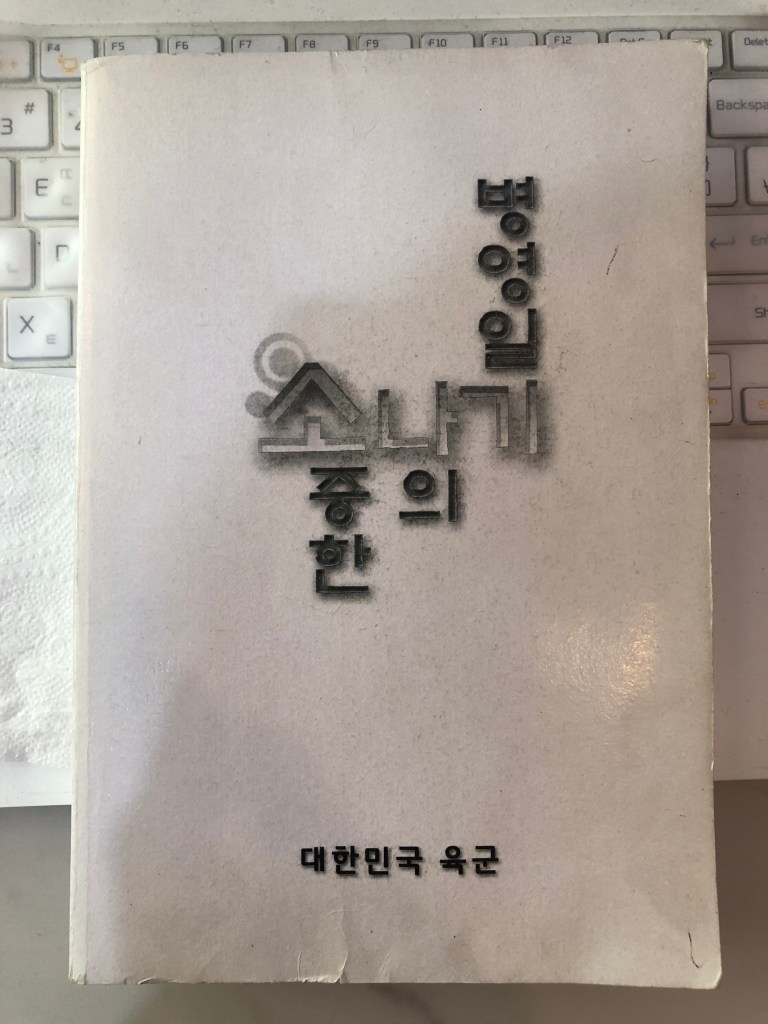
    My military diary, nicknamed “Sonagi” (meaning ‘sudden rain shower’)

    I kept a little diary back then.
    I mustered up the courage to ask for an autograph—
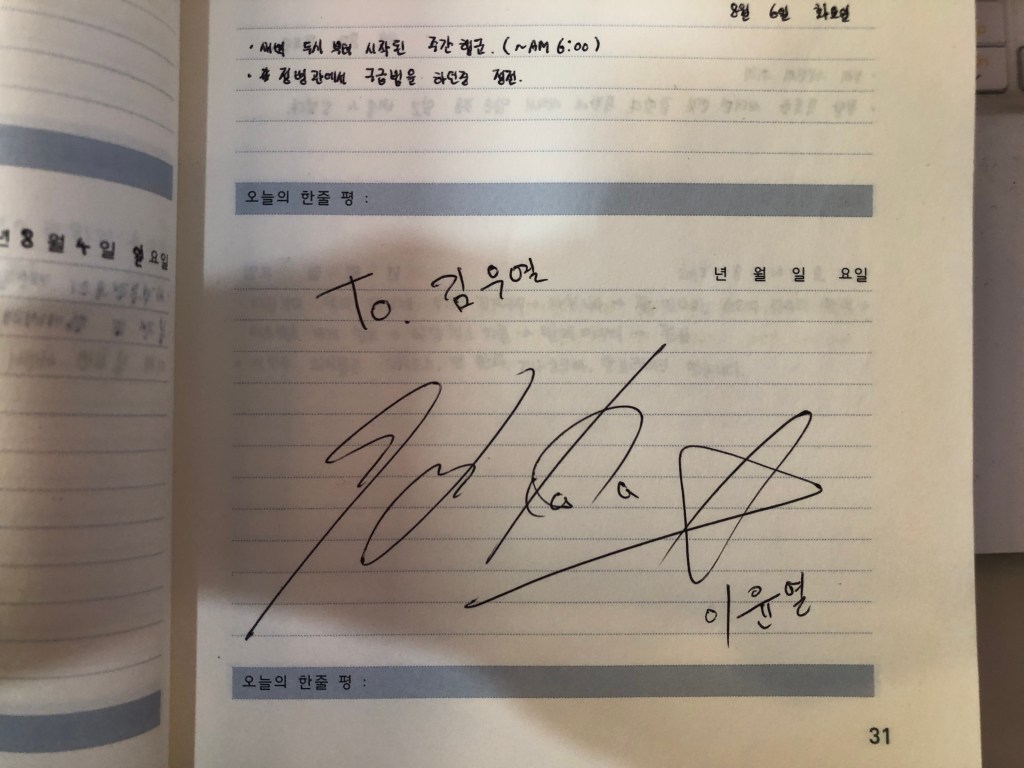
    and NaDa, Lee Yoon-Yeol himself, graciously signed it.

    NaDa’s signature – still one of my most treasured items


    Word got around, and people began crowding our barrack.
    It got a little noisy, but honestly?
    It was worth it for that tiny spark of joy during basic training.

    I think after the boot camp period,
    he switched over to a reservist role (“sang-geun” service).


    Years have passed since then,
    but that moment, that signature—
    it remains one of the brightest memories of my military life.

    If you ever read this, Lee Yoon-Yeol—
    thank you again, sincerely.


    🎮 Who Is NaDa?

    Lee Yoon-Yeol, aka NaDa, is a legendary pro-gamer from South Korea.
    Dominating the early 2000s StarCraft scene,
    he earned titles like “Genius Terran” and “Emperor of Games.”

    • WCG 2002 Champion
    • Starleague victories
    • Over $200,000 in total prize earnings
    • At one point ranked #1 globally in esports earnings

    Together with BoxeR (Lim Yo-Hwan) and iloveoov (Choi Yeon-Sung),
    he was part of the iconic “Terran Trinity.”

    After retiring from pro play,
    he served his mandatory military duty—
    where our paths crossed in the most unexpected way.

    Even now, thinking about it makes me smile.


    🖼️ (Planning to take a photo of it when I visit my parents’ house and proudly share it here 😄)

    If this story made you smile—or brought back a little nostalgia—
    you can support me with a cup of coffee! ☕🙂
    It helps fuel more posts like this one.

    👉 https://buymeacoffee.com/uyeol